

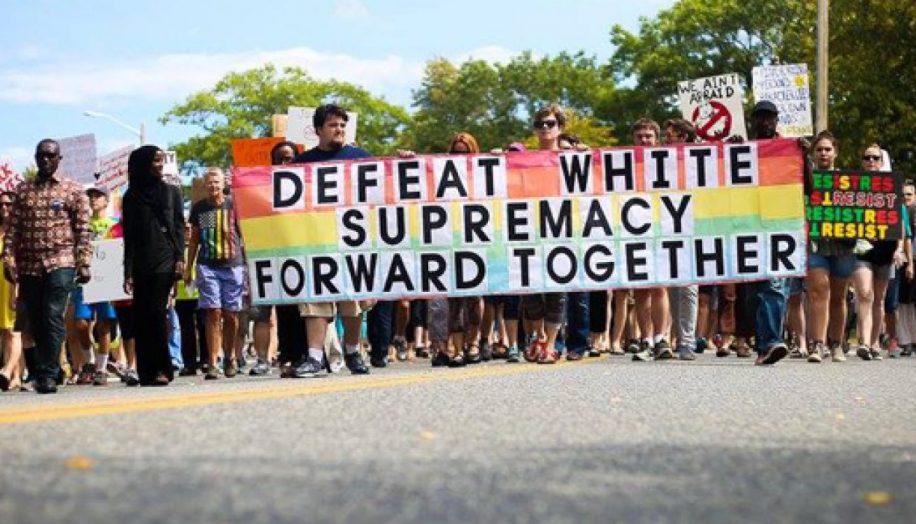
On the podcast this week we talked about the shift that has recently occurred in the Maine Democratic Party, which was on full display at the convention last week. Previously, the party often had a “conservative-lite” feel to it. Democrats had the bad habit of couching their policy visions not in party values but rather in terms of how they could save the government money, lower taxes, or preserve a family structure conforming to 1950s ideals. In the past few years, we have begun to see movement away from this, but perhaps the most important—and incomplete—shift is how candidates have begun to seriously engage on race.
For example, in the Democratic gubernatorial primary race, Adam Cote has consistently made the case for tribal sovereignty, trying to distinguish himself from Janet Mills in his latest ad. For her part, as attorney general, Janet Mills has consistently fought on behalf the DREAMers. At the Indivisible Waldo forum on Monday, I heard all the candidates consistently recognize Maine’s increasing diversity as an asset we should embrace. But the person with the freshest take—by far—was Mark Eves, former speaker of the House. I don’t know if it was part of his regular stump speech, but his rap on immigration was fresh, pointed—and even funny.
While I won’t do it justice, here’s my recollection of how it went:
“I’ve got a plan. It’s a plan to build a wall—between us and New Hampshire. New Hampshire is going to pay for it. We’re going to make sure that we keep all our young people in the state, because we know we won’t be able to meet all our workforce needs if young people keep leaving. But guess what, even if we kept all our young people here, it still wouldn’t be enough. There will still be jobs we can’t fill. That’s why we need immigration. Our economic future depends on becoming a welcoming state.”
Eves displayed a clever mixture of mocking President Trump, avoiding the technical minutiae that usually accompanies “workforce development” conversations, and recognizing the economic upsides of immigration.
As journalist and political commentator Ezra Klein has said, if we learned that the birth rate ticked up five percent, no one would worry about babies growing up to steal jobs. Without the blinders of racial bias, population growth pretty clearly accompanies a growing economy, and vice versa. Industrialized nations should most fear the problems of Japan—where adult diaper sales now exceed infant diaper sales—not too many hard-working young families moving to town.
These arguments have been made by experts in Maine quite a bit, like the Maine Development Foundation, and even the Chamber of Commerce. But I think what makes Eves’ way of communicating on the issue so effective is something that most Democrats have lacked on immigration: Swagger. Confidence. Energy from the moral urgency of history.
We still have a long way to go. But, combined with new messaging research conducted by national organizations like Demos, it seems like opportunities are on the table to discuss race and immigration in a clear and open way. We have to avoid the usual post-primary temptation to not talk about race because its “controversial”—even as the Republicans relentlessly assault the electorate with anti-immigrant and dog-whistle messaging. Polite avoidance of the issue is not a winning strategy. We have to make sure politicians build authentic relationships with communities of color outside of election season. We have to hold them accountable for the bad votes some have taken on immigration, criminal justice, and other latent forms of discrimination. But there’s no question in my mind that leadership, swagger, and a refreshing dose of truth and human decency are only going to help.
(Photo: Lauren Kennedy)

 Daily Updates