

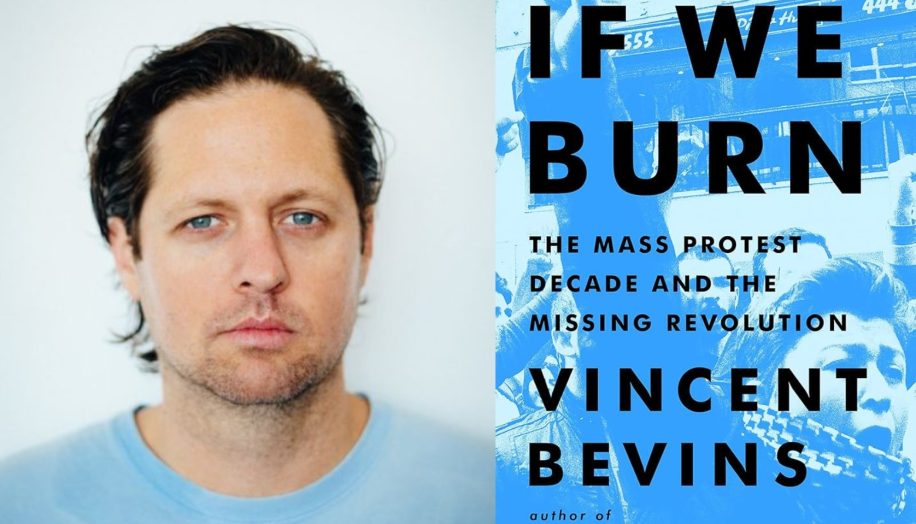


This week on the podcast, we are sharing an encore episode of Ben Chin’s interview with author and journalist Vincent Bevins. The duo discusses the common belief that large protests and social movements can lead to significant change and how these beliefs were challenged in the 2010s, with many protests leading to unintended consequences or by being co-opted by opposing forces.
Ask a question or leave a comment for a future show at (207) 619-3182.
Subscribe to the podcast feed using any podcasting app or subscribe on Apple Podcasts.
Here’s a small snippet from Ben’s interview with Vincent. Listen to the full episode to hear the duo dive into case studies of mass protests and failures from around the world. This text has been edited for clarity.
Ben: What, in a nutshell, what happened in the 2010s? And what might we have learned was simplistic about that way of thinking about things?
Vincent: One, you might call this sort of raising awareness model of doing politics. Like, all you have to do is show everybody how bad a thing is or how good a good thing is, and then everything else will sort itself out, especially with the beginning of the Internet. This seemed very powerful that, well, we just need to raise awareness around this cause.
Very smart people believed in this and there’s very, you know, serious elaborations of how this is supposed to work back in, you know, the beginning of the era of social media.
And then another presupposition — which I also held going into the 2010s — is if you got enough people into the streets behind a progressive cause with good intentions and united in the demand for a more just society, it might not always work out perfectly, but it was always going to push in the right direction. It was always going to be more good than bad.
Unfortunately, and I wish it weren’t the case — and a lot of this melancholy and tragedy and the self searching of trying to understand why these two things were not wrong, end up dominating the book — but it turns out that both of these don’t really work out.
Ben: Chile stands out as one of the case study examples that is more positive. Could you explain what happened there?
Vincent: Now, the student protests in 2011 were led by organizations in elite Chilean universities. These are universities that had played an important role in redemocratization, that had been activist centers since the era of the U. S.-backed Pinochet dictatorship. They made a lot of noise in the streets. They became famous and inspired people, but it didn’t really go anywhere. Some of these leaders end up entering politics in 2013, but they’re really on the margins of Chilean politics.
In 2019, a group of young Chileans end up blocking turnstiles in the capital, Santiago, to protest an increase in the price of the metro fare. There is a ham fisted, brutal crackdown, which shocks the country.
So not only do you have students that are at the front of this, you have students being attacked by police, and then you get the whole nation sort of shocked. You know, even parts of the nation that wouldn’t necessarily identify with the initial cause, respond to the protest.
Now, remember I said at the very beginning of the interview: there’s very little correlation in general in the 2010s between the original demands of the protesters and the final outcome. What actually matters is who’s waiting in the wings — who’s organized and prepared or has access to some alternative means of mobilizing or source of power that is able to take advantage of the opportunities created.
That’s our people from the class of 2011. It’s the student leaders that eight years prior had organized for very similar reasons in similar organizations. So Chile, in a sense, was lucky in that the final outcome of 2019 was imposed from the outside. It wasn’t the kids in the square that decided what the outcome was going to be. But the imposition of the final outcome was done by people that more or less understood what this was all about. So in the case of Chile, yes, you have a progressive government as a result of this strange explosion that no one had really planned for.

 Daily Updates