

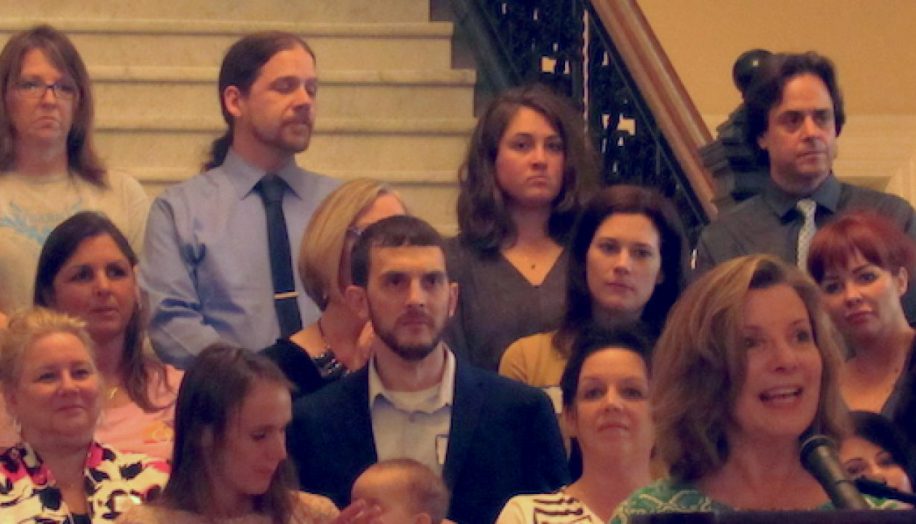
While thousands of Mainers continue to wrestle with substance use disorder, members of the recovery community gathered at the State House on Friday to lift up their stories of hope and struggle in a “force of voices,” with the goal of making recovery — and all the diverse paths that lead to it — visible.
Representatives from recovery centers from Aroostook to Cumberland, such as the Portland Recovery Community Center and the Bangor Area Recovery Network, announced the formation of the Maine Recovery Coalition as well as the establishment of May 24, 2019 as Maine Recovery Day, per an official proclamation approved by the Maine House and Senate.
Leslie Clark, a person in recovery since 1989 and the executive director of the Portland Recovery Community Center, said that these organizations “are movements.”
“It’s about organizing our collective voices to save lives,” she told the roughly 100 people assembled in the Hall of Flags.
A recovery center is a place where people who have struggled with substance use disorder can access support services, such as group meetings, as well as legal help and treatment providers. Many of the meetings and group activities involve people sharing their stories and the ways they’ve pursued healing after years of substance use.
“I think we’re like a school,” said Clark. “Not a school with classrooms and textbooks, but a school where we learn through sharing our stories with one another. Sharing our experiences. How we healed.”
The people spearheading these centers are “a force of love, of knowledge, and experience,” she continued, describing them as the “rising tide” needed to push back against the opioid crisis.
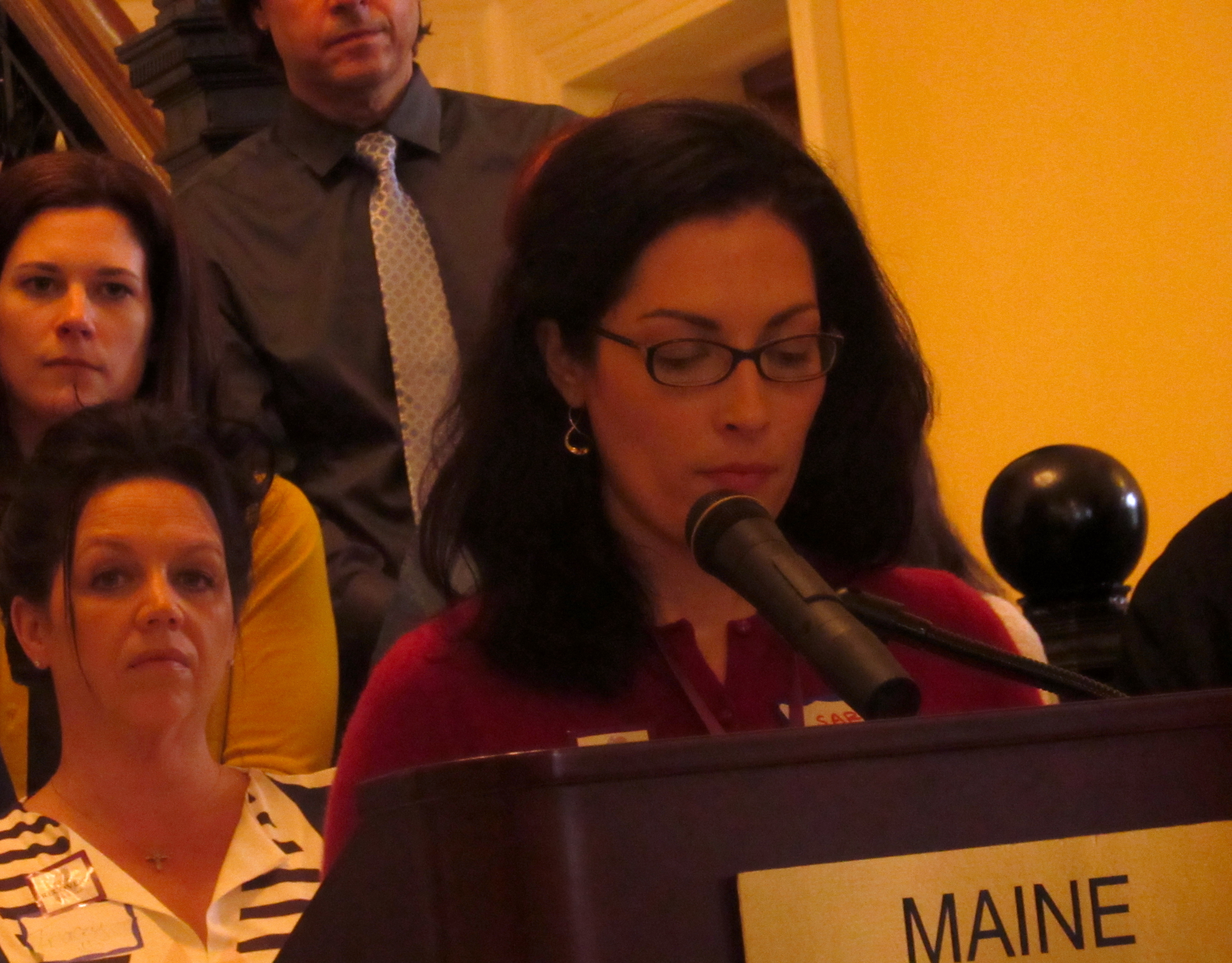
“Whether we still actively use or are in recovery, we are human” said Freeport resident Sarah Siegel, a survivor of sexual abuse and a person in recovery. “We desperately need to be seen, and supported and invested in.”
While Governor Janet Mills could not attend— instead receiving a silver recovery ally bracelet from the coalition prior to the event — Director of Opioid Response Gordon Smith spoke for her office. He emphasized that although treatment options for substance use disorder are well understood, figuring out strategies to prevent substance use in the first place remains “the most important thing.”
Recovery rooted in art
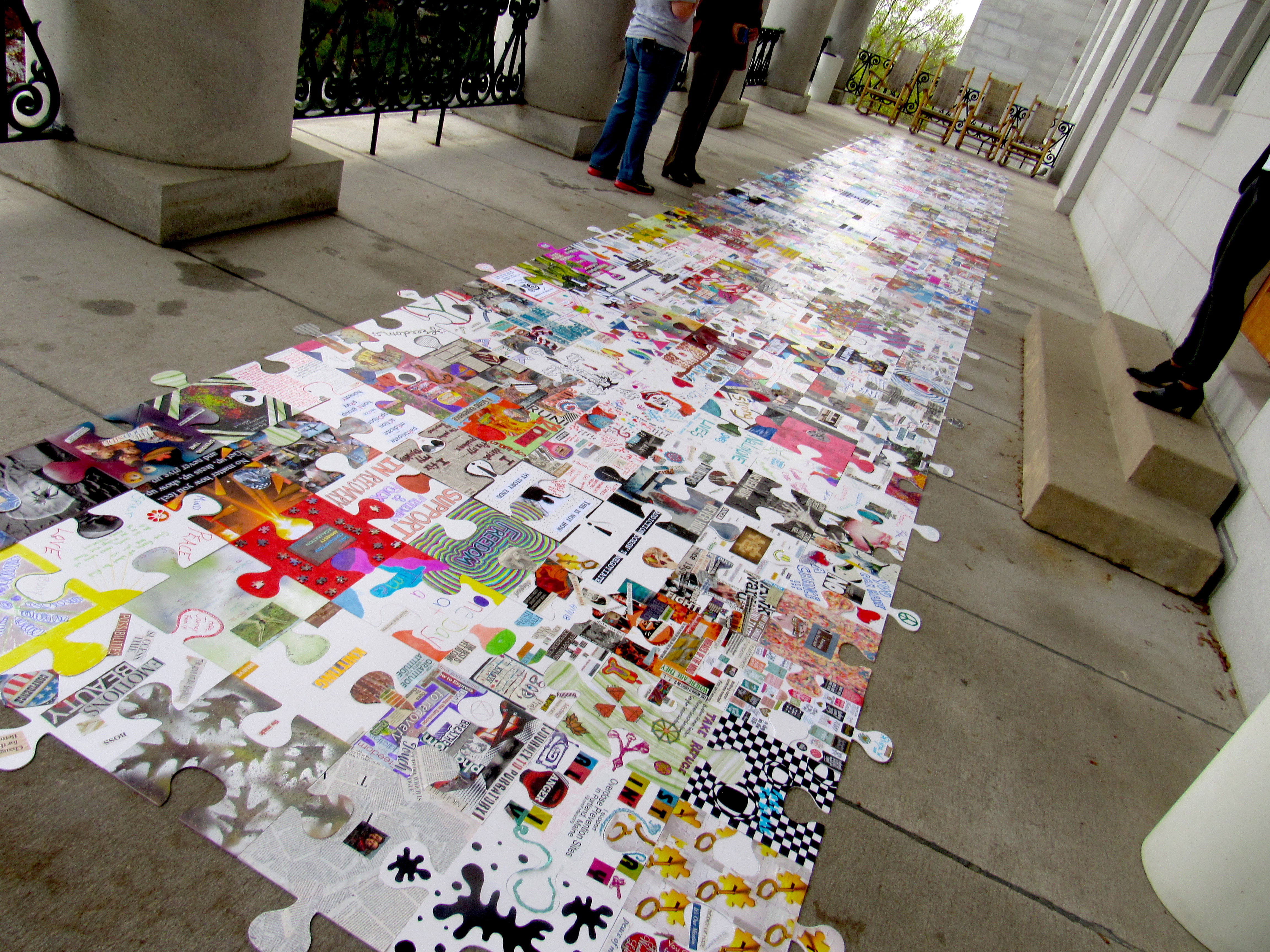
Glenn Simpson, the chief architect behind the Pieces of Recovery puzzle, had a chance to display the finished project at the State House during Friday’s event. The 418-piece puzzle, laid out on a third-floor balcony, expressed in pictures and drawings a major theme of Recovery Day: These supportive communities are often built from isolated stories of pain.
As an alcohol and drug counselor, as well as a social work graduate from the University of New England, Simpson recalled listening to a TED talk by journalist Johann Hari. In the talk, Hari argued that the opposite of “addiction” is actually connection.
“That clicked for me, that recovery is like a puzzle,” Simpson said. “That while our individual stories are important, it’s that connection we make as a community where real healing begins.”
The 418 pieces were crafted by people in recovery from all corners of the state and represented the 418 Mainers lost in 2017 to the opioid crisis.
Top photo: Leslie Clark speaking at the event. (Photo: Cara DeRose | Beacon)

 Daily Updates