

Residents of Portland are being given an opportunity to share their vision for how the city government could function and what to prioritize after a tense few years that highlighted a fissure between the will of the city’s voters and those in power.
In June, voters will elect members to a committee that will examine and revise the Portland city charter. In advance of that vote, the volunteer-led group People First Portland has launched an online forum that lays out 22 priorities to foster stronger democracy in Maine’s largest city and that allows residents to weigh in on what the city’s charter should look like.
The “People First Charter Forum” includes a number of proposed reforms, such as eliminating the city manager position and replacing it with a more empowered mayor and city council, as well as other ideas submitted by People First Portland and members of the public.
Kate Sykes, a volunteer with People First Portland — which won four out of five ballot measures it put forward in the November election — said revising the city charter is essential to reforming democracy in Portland.
In the early 1900s, Sykes said Portland had a government that was much more responsive to its people, with a strong socialist movement in the city. However, over the years, the city’s system of governance has moved in a more conservative direction.
Sykes said some progress was made in undoing that in 2010, when the city’s charter was opened and an elected mayor position was added. However, more reform is needed, she said, as the mayor has limited power and essentially functions as an at-large city councilor.
The real control, Sykes said, lies elsewhere in the system.
“All the administrative power of the city is invested in the hands of the city manager, which is an unelected position and has no accountability to the people of Portland at all,” she explained.
In addition to issues of accountability, the system of empowering the city manager was originally rooted in racism, according to former mayoral candidate Tom MacMillan, who wrote a master’s thesis on Portland politics in the 19th and early 20th centuries.
“The city charter has given the majority of political power, such as the authority to appoint city officials and draft the city budget, to the city manager since 1923,” MacMillan wrote in a 2019 piece for the Portland Press Herald. “In that year, voters, responding to religious and ethnic bigotry whipped up by the Ku Klux Klan, voted en masse to install a city manager and, in effect, ensure marginalized people would have little say in city government.”

In that article, MacMillan noted that throughout the years, the city manager position has allowed pro-business interests to hold an undue amount of power in Portland politics.
Current city manager Jon Jennings, who has announced he will leave his post in 2022, has repeatedly drawn the ire of activists, including the Portland Black Lives Matter movement, which called on him to resign during the summer of 2020, arguing that “since the start of his tenure in 2015, Jennings has repeatedly advocated for policies that hurt poor, predominately Black and brown people.”
People First Portland has also clashed with the city establishment as a whole, most recently after the mayor and the majority of the city council announced they would not implement the hazard pay portion of a minimum wage referendum that passed in November until 2022, despite the understanding voters had that the initiative would be implemented soon after the election.
Sykes said an effective reform to the city charter would be eliminating the city manager position and shifting much of the administrative responsibilities of that job to the mayor. In that way, Sykes said increased power would be placed in a position that is accountable to both the city council — which she hopes will be expanded and made into a paid full-time job under the city’s new charter — and the voters.
Additional priorities
While creating a strong mayoral system is important, Sykes said there are a number of other priorities People First Portland wants considered in the upcoming charter. Some of those include expanding voting rights, shifting funds from the police to public services, and establishing a municipally-run broadband and power utility.
Other groups are also forming priorities for the city charter process.
“It’s certainly a long time coming that the people of Portland will have a direct say on how they want their government to look,” said Jason Shedlock, a regional organizer with Laborers’ International Union of North America. “And I think what we’re seeing increasingly is that the voices of working families need a seat at the table when it comes to their government structure.”
Specifically, Shedlock said he hopes the charter will ensure strong labor protections for workers.
“When we build in the city, we want to build using labor that we can be proud of, labor that sustains middle class jobs,” Shedlock said. “Those are the things we’re pushing for. Labor that’s going to be safe, labor that’s going to have health benefits and retirement so that people that work in the city can live here.”
Shedlock added that as part of the charter process, “Taxpayers should ensure that we establish Community Benefit Agreements with union labor whenever we spend public dollars building our city.”
Jess Falero and Peter McLaughlin, community organizers with Maine People’s Housing Coalition, also have high hopes for the charter revision process.

One priority for the group is increased protections for unhoused people in the city, such as having safe shelters, Falero said.
“And what that means is having staff that are trained in comprehensive trauma and [having] needs-based shelters as well around the city,” Falero explained.
McLaughlin added that along with People First Portland, People’s Housing Coalition also supports addressing the power that’s been placed in the city manager position. McLaughlin said when advocates ask the city for reforms, they are often told by elected officials that those changes are under the purview of the city manager. In that way, he argued, the current system allows officials to duck accountability from those pushing for reforms.
“Ultimately, it’s a barrier to change. It’s a blockage,” he said of the city manager system.
Upcoming election
The charter commission process originally began in Sept. 2019, when city council members voted to re-open the charter in response to a successful petition drive by Fair Elections Portland for a ballot question on publicly-funded municipal elections. The council members argued such a move should be determined by charter amendment, rather than popular vote.
Because Portland’s charter essentially functions as the city’s constitution, Sykes said the upcoming election determining who will sit on the commission is essential. That contest will take place June 8, with nine spots open on the 12-member commission (three members have already been selected by the city council).
One worry Sykes has, though, is that the timing of the election isn’t ideal.
“It’s unfortunate that the charter commission election is happening in June, which is historically the lowest voter turnout of all elections in Portland,” she said. Advocates had originally proposed including the charter commission election on the November 2020 ballot after voters approved opening the city’s charter in July. But instead the city council slow-walked the process, delaying the election until June 2021.
Recognizing the importance of the charter being opened, Sykes said various advocacy groups in Portland have discussed putting forward candidates to serve on the body. Nominating papers became available Monday with a return deadline of March 29.
After the election, Sykes said the commission has a large amount of latitude on what aspects of the city’s charter it examines. She said the body will likely work on the charter for about a year before the proposed changes are put to a general public vote.
Sykes said she hopes the online forum People First Portland has created will serve as a resource for the commission members, giving them insight into what kind of changes residents want. She said the group is encouraging those on the left, right and center of the political spectrum to add comments and ideas for the commission.
“We want this to be as close to an open government, direct democratic process as possible,” Sykes said.
As the election process for the charter commission members gets underway, organizers are expressing optimism that candidates interested in making structural change will win in the June election.
Shedlock said he’s hopeful that will be the case, pointing to the success of the People First Portland’s referendums in November.
“I think what we’ve seen is that when issues are taken directly to the voters and explained to the voters in a way that meets them where they are and cuts through the noise of the rhetoric and the big money that is spent, the values that working families care about rise up and are important,” he said.
Falero and McLaughlin are also optimistic about the election, with McLaughlin saying the process represents an opportunity.
“I’m more hopeful than I have ever been in my ten plus years living in Portland,” he said. “There’s more people engaged with local politics and community organizing than there has ever been and that suggests some change is going to come and that folks are going to engage with this meaningful process.”
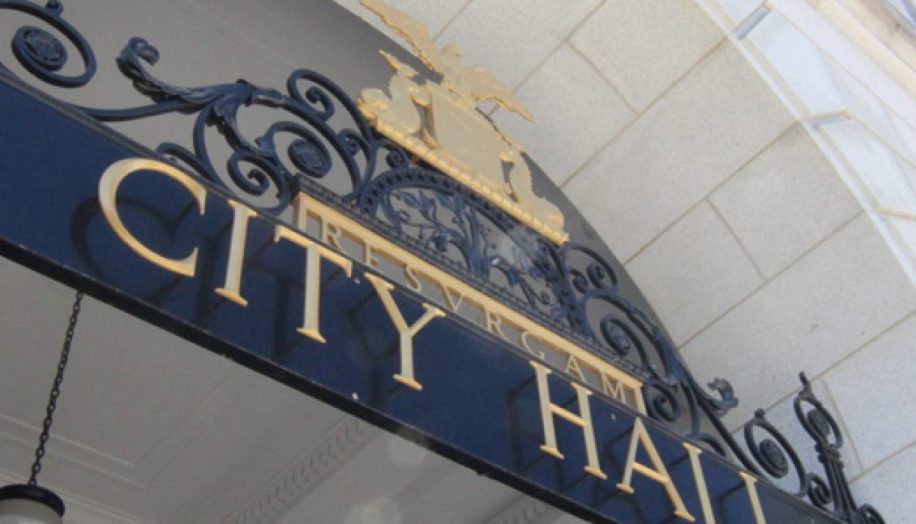
Photo: Portland City Hall | Beacon

 Daily Updates