

Some civil rights advocates are worried that Question 1 on next month’s referendum ballot could block incarcerated people’s right to vote.
The coalition Voter ID for ME successfully petitioned through a citizen initiative to put the proposed legislation on the November 4 ballot. Question 1 asks voters to consider requiring photo identification to vote both in-person and absentee.
It would also prohibit absentee ballot requests by phone, end the ongoing absentee voter registration program, limit the number of drop boxes in municipalities and eliminate two days of absentee voting, among other changes to voting procedures.
Alex Titcomb, the lead petitioner and co-founder with state Rep. Laurel Libby (R-Auburn) of the conservative political action committee The Dinner Table, said the proposal is partially a reaction to “election integrity issues,” and that, if passed, it would increase the “security and transparency of the election process.”
Others disagree. The League of Women Voters of Maine argued that Question 1 will only guarantee voter suppression. The nonpartisan coalition Save Maine Absentee Voting, of which the League of Women Voters, the ACLU of Maine and others are members, said that, if enacted, Question 1 would unfairly restrict Mainers’ access to the ballot box.
People who are incarcerated in Maine prisons in particular are worried it could eliminate their ability to vote. Maine and Vermont are the only two states in the country where people maintain their right to vote while serving a prison sentence for a felony conviction.
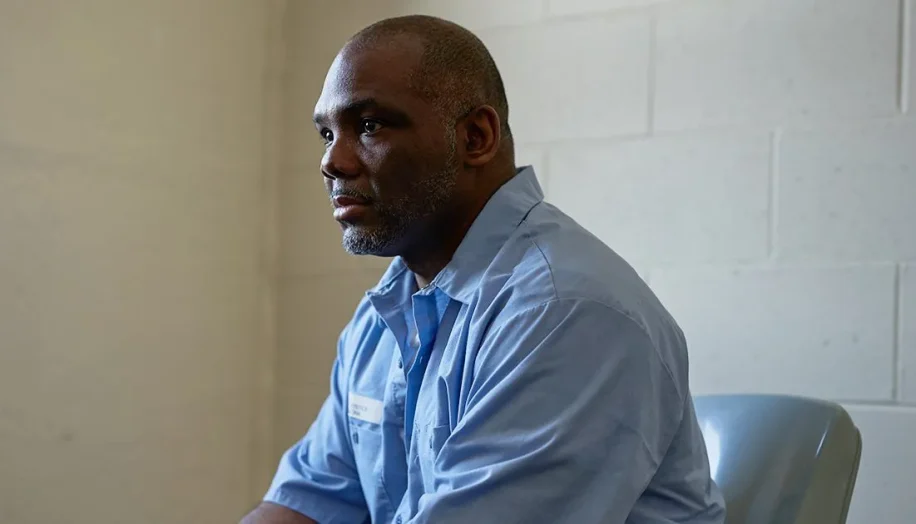
“Maine’s constitution is very clear on those rights for all citizens to have the opportunity to vote,” Foster Bates, the president of the Maine State Prison chapter of the NAACP, said.
Bates, who has been incarcerated for more than two decades, helps organize voter registration and education efforts at the Warren prison. As word spread that Question 1 would require photo IDs to vote, Bates said some inmates were furious.
“The restriction itself is taking away our ability to register, to use absentee ballots, try to force us while we’re incarcerated to get the right type of IDs, which we’re not allowed to have,” Bates said. Voting “is the last thing that gives us some type of responsibility, some type of accountability to our life to have a say in what goes on.”
Question 1 would require voters to show a valid form of photo ID to vote at the polls. To vote absentee, voters would have to return their ballots with a new “identification envelope” on which voters would have to provide either their license number or a photocopy of their ID.
Valid forms of ID would be limited to a Maine driver’s license, non-driver identification card or interim identification card; a U.S. passport or passport card; or a military or veteran identification card.
Maine Department of Corrections policy prohibits inmates from keeping items such as driver’s licenses on their person while in custody, according to a corrections spokesperson.
Only case managers can access those documents when necessary. Instead, every inmate gets a department of corrections-issued ID, which is not on the proposed legislation’s list of acceptable forms of identification.
Titcomb, from The Dinner Table, said he knew that incarcerated people in Maine maintain the right to vote, but he didn’t realize the photo ID requirement might prevent prisoners from voting.
“That’s news to me,” he said.
In response, Titcomb pointed to the third section of the proposed legislation, which directs the Department of the Secretary of State to establish procedures for the issuance of free, non-driver ID cards.
“I would think that that would cover the situation about the folks in prison if for some reason they don’t have a valid ID that is currently listed,” he said.
The coalition chose the valid forms of ID in the legislation because they are the most common, Titcomb said.
Inmates can apply for a state-issued ID while in custody. However they only gain possession of it when they leave prison. Leading up to their release, a case manager will verify that inmates have at least two forms of ID for employment purposes, such as a driver’s license or non-driver ID card, or help inmates obtain those if they don’t, according to agency rules.
But they currently can’t have the IDs on them as prisoners. The department of corrections would have to change its rules to give inmates access to the valid forms of ID listed in Question 1. That means a solution wouldn’t be up to the secretary of state’s office; rather, the corrections department would have to change its policies.
However, if Question 1 passes, Secretary of State Shenna Bellows said her office would work with corrections officials to ensure incarcerated people could continue to vote.
DOC spokesperson Jill O’Brien echoed this: “MDOC and SOS work cooperatively on many issues and will determine the appropriate course of action, depending on the outcome of the referendum.”
All voting in Maine jails or prisons is done by absentee ballot. Regardless of where a person is incarcerated, inmates register to vote in the town they lived in at the time of their arrest. The secretary of state’s office routinely conducts voter registration drives inside prisons, and distributes and collects voter registration applications to send to municipal clerks for processing.
The exact impact of Question 1 on each of Maine’s 15 jails is more difficult to pin down, given that each jail’s policy on allowable possessions could differ. The correction department is the state agency that runs and establishes the rules for all of Maine’s prisons, where inmates may remain for years. Jails are run by counties and have a more short-term, fluid population.
Even if the corrections department changed its policy, the photo ID requirement and other changes to absentee voting would still create additional, logistical hurdles for people in prison, said Alicia Rea, a policy fellow at the ACLU of Maine.
Question 1 would increase the number of steps required to vote, which “vastly increases the risk of a ballot being rejected for a technical reason. When you are in custody, your time to fix that technicality is way diminished,” Rea said.
“Then we’re putting so much dependency on the department of corrections’ cooperation and also expediency for this process,” she added. “And that’s not really fair to them when voting is not their lane at all. Their job is the custody and care of these people.”
his story was originally published by The Maine Monitor, a nonprofit and nonpartisan news organization. To get regular coverage from The Monitor, sign up for a free Monitor newsletter here.

 Daily Updates