

 The day after the 2016 presidential election I overheard a father at a Cape Elizabeth preschool say, “We have all survived LePage, so we’ll survive Trump.” On the third week of the Trump shutdown I heard from a distant relative, “We survived the Obama shutdown so…”
But we didn’t all survive former Governor Paul LePage’s refusal to expand Medicaid, and many federal workers and contractors will be paying for the Trump shutdown for months to come. What these well-intentioned, optimistic, comfortable, middle-class people can’t see is the actual challenge of living paycheck to paycheck. They don’t have the experience to understand that future back-pay doesn’t buy the groceries now. Low-income people are the most impacted by these conservative failures, but somehow their voices, and experiences, continue to go unheard.
As the wage gap widens, as more people fall below the poverty line and the voting base becomes poorer and poorer, the strength of progressive politics depends on the support of those below a certain income bracket. Elevating the voices of the rural poor in Maine, and inviting a variety of people who live or have lived below the poverty line to the table, is the best path forward for Maine politics.
Fact is, politics has never been a poor man’s game. People who live near or below the poverty line have not historically been welcomed to the table. Poor people had to fight for the right to even vote, let alone run for office or serve on committees. We are more often a talking point at election time than an actual political consideration. Candidates volunteer at food banks for a photo op, but that’s about it. But changes in the political landscape can mean life or death for people near or below the poverty line, which is why it is so important that those making state policy have some actual knowledge of how it will impact poor voters.
It’s no secret that low-income people don’t vote at the rates of those from higher income brackets, much less show up for primaries, or get involved in campaigns. It’s harder for us to get time out of our hourly wage jobs, or find childcare — and often there are gatekeepers working to suppress the votes of low-income people. To be frank, political environments aren’t built for poor people. Candidates like Bernie Sanders, like Diane Russell here in Maine, like Alexandria Ocasio-Cortez in New York City, have taken the early steps to open up the political world up for a more diverse voting population, and our politicians need to continue further down this path.
In 2016, I was a delegate for Bernie Sanders at the Maine Democratic Convention. While there, I attended a seminar about the welfare cliff. Sitting in that room at the Holiday Inn in Portland, I listened to the other attendees ask questions like, “How do we help these people get to job interviews?” and “What is being done to help low-income people complete college?” I quickly realized that very few people in that seminar were speaking from a place of experience. It was all about helping someone else, and most assumed low-income meant uneducated and jobless. They had read the statistics, they had seen the data, but they didn’t know the people. In reality, many college-educated, hard-working people aren’t sleeping at night because of the prospect of suddenly losing all support.
As a low-income person with a bachelor’s degree and student loans, I could always find a job, but a job that paid enough to get me off of welfare was far more difficult to secure. With each new job I was plagued by a perpetual seesaw effect: When I made more money, I would lose housing assistance. As that housing assistance went down, my EBT benefits would go up. As my EBT benefits went up, help in another place would go down. I never knew how to budget from month to month, which is a much bigger challenge than getting to a job interview. The people who attended the welfare talk, and many others within the left wing of politics, wanted to help, but there is only so much one can do without first-hand experience.
As it stands, the Democratic Party is the best defense people in my income bracket have against the conservative drive to slash government programs and assistance. Dems want to help. The heart is there. What they are missing is the real-life experience of a woman who spent four hours sitting on a hard plastic chair at the DHHS office, a one-week-old baby napping in her arms with a two year old screaming out of boredom nearby.
When policymakers discuss the most important steps to repair the broken system we need to have someone in that conversation who knows the frustration of being late for work because their DHHS caseworker didn’t have enough training to operate the computer system, or who knows the terror of not being able to feed their children because a government shutdown or sudden change in policy meant they didn’t receive EBT benefits that month.
It is only with the ability to see through the eyes of experience that we can truly find solutions. The disconnect between politicians and the poor will only be remedied by inviting low-income voters to the conversation, respecting us as valid members of the party, electing low-income candidates to office and into important party positions and, above all, making sure they — we — have the ability to vote. The survival of progressive political movements depends on it.
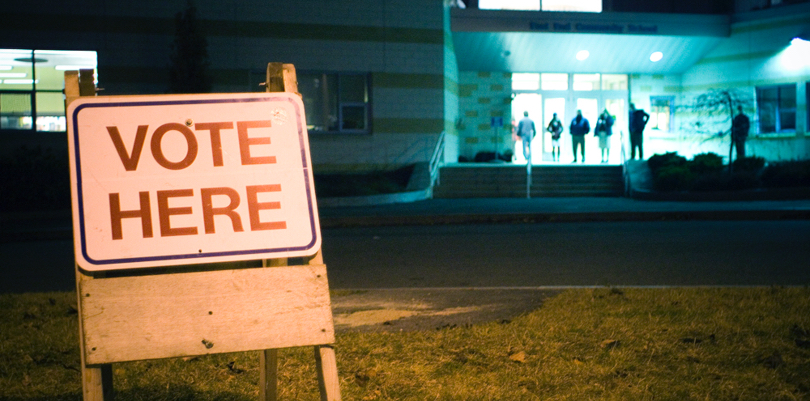
(Photo: Brian Bruchman | Creative Commons via Flickr)

 Daily Updates