

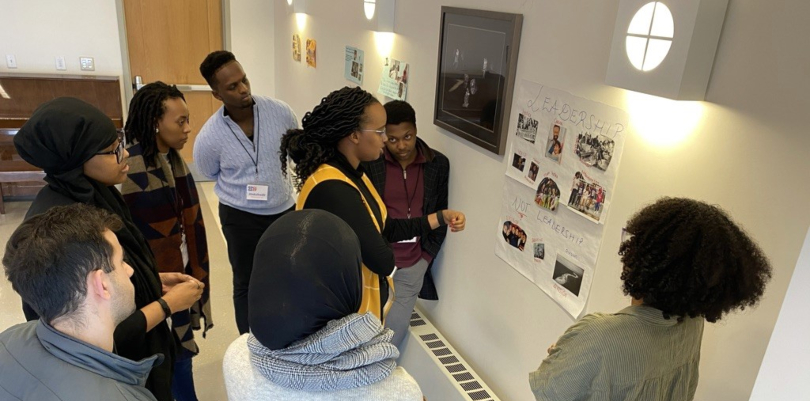
As Maine has become more diverse, with a small but growing immigrant population, Pious Ali has seen a gap emerging.
Ali, who is originally from Ghana and serves as a Portland city councilor, is the founding director of Portland Empowered — a group that seeks to ensure student and parent voices are heard within Portland Public Schools. He said while there are a variety of programs to help New Mainers in developing skills and finding employment when they are graduating high school, there is far less support afterwards.
“When they need actual support to navigate the work or career pathway that they want to go into, the opportunity for them to connect is limited,” he said.
Ali, who in 2013 became the first African-born Muslim American to hold public office in Portland when he was elected to the city school board, wanted to change that dynamic. As a result, Portland Empowered launched a fellowship program for young Mainers from historically marginalized communities, with a pilot cohort that began last year just before the onset of the COVID-19 pandemic.
The program, called the Civic and Community Engagement Fellowship, is geared specifically to young adults between the ages of 21 and 27 who are immigrants and ethic or racial minorities, Ali said.
He explained that the fellowship is meant to foster leadership development and involvement in political and civic life, allow participants to build on existing strengths and develop workplace readiness skills, help attendees create connections with each other, and generate discussions about racial and cultural awareness.
“We invite emergent leaders to come as they are,” Ali said, adding that the pilot program, much of which took place virtually due to the pandemic, had 12 participants. “All that we do is work with them to elevate and build on the skills that they already have and also give them the opportunities to network with other young people who have the same shared backgrounds and learn from each other.”
Ali said one strategy the program employed to accomplish those goals was featuring a variety of guest speakers, many of whom come from backgrounds similar to the participants, who shared expertise in their particular field.
The fellowship will be taking applications for its next cohort in the summer, Ali said, with the goal of beginning the program in the fall.
Representation in health care
As part of the program, participants conduct projects in a particular area of interest. One such project from the pilot cohort was focused on increasing and highlighting the importance of diversity in the health care field. The project was run by Mariam Mohamed, who works at MaineHealth and is also the founder of the Maine Youth Network.
Mohamed said often when Mainers of color seek medical care, they don’t see many people who look like them. That can lead to trepidation and a lack of trust, she said.
“Oftentimes people say they don’t feel at ease when they go to a hospital,” she said. “They don’t feel comfortable, or feel like they’re going to get the best of care, or feel like they can connect to anybody.”
Mohamed explained that there are also cultural customs and norms in specific communities that many medical personnel aren’t familiar with, which can sometimes lead to challenges when it comes to treatment.
Partnering with MaineHealth and the Maine Youth Network, Mohamed held a series of virtual panels this year to shed light on the need for diversity in health care and to share information about pathways for Mainers of color and people in the immigrant community to join that field. One such initiative is a program where students can take a course that puts them on a path to being hired by MaineHealth, Mohamed said.
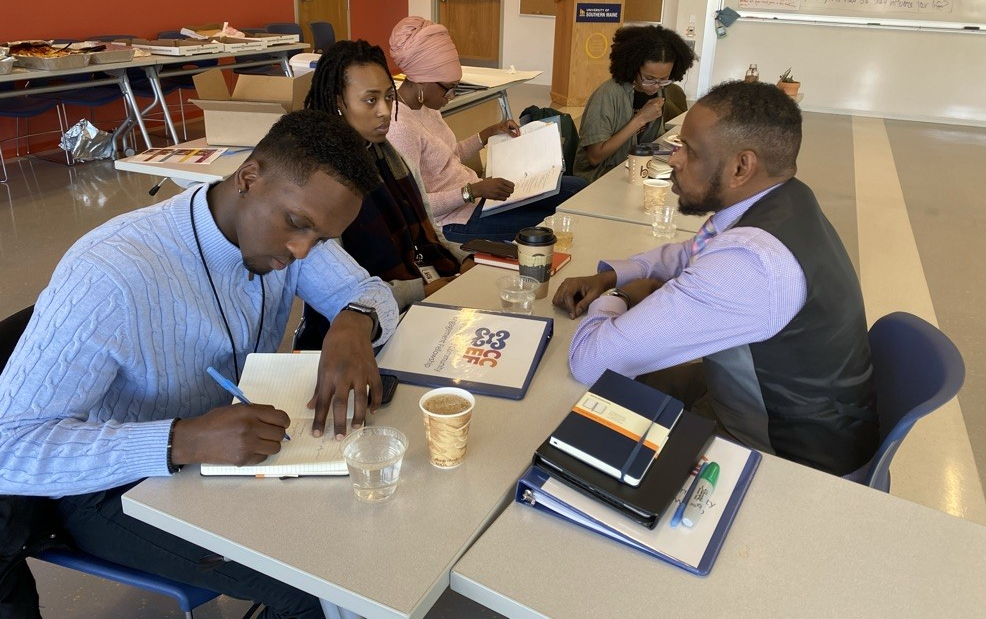
Mohamed will be continuing her project into the future, adding that she hopes to have a bigger panel event once the pandemic is over. However, the initial feedback she received was that it was valuable for youth to hear from and connect with people of color who have successfully joined the medical field.
The need for the project has become even more clear given the events of the past year, Mohamed added, explaining that the pandemic has shed a light on the dangers posed by the disconnect between many people of color and the health care industry. As Beacon previously reported, Maine had some of the worst COVID-19 racial disparities in the country in 2020, and advocates in the immigrant community raised concerns earlier this year that the state’s vaccine distribution plan was not equitable.
However, Mohamed said even though the pandemic has put the lack of diversity in the health care field into focus, the negative impacts predate the COVID-19 crisis.
“There has always been that stigma and that lack of understanding and that lack of connection when it comes to the health care field,” she said, with “a lot of people of color not feeling like they can be seen if they have a minor issue they are facing.”
Running for office
Another fellowship participant was Nasreen Sheikh-Yousef, who is currently a candidate for an at-large seat on the Portland Charter Commission, which will be tasked with revising a document that essentially acts as the city’s constitution.
Sheikh-Yousef did her fellowship project on how prospective leaders can run for political office. The project was geared toward helping people from marginalized communities in particular seek elected positions, Sheikh-Yousef said, with a specific emphasis on how to do community organizing and build the support networks necessary for a campaign. Another focus of the project was providing strategies to help prospective candidates identify what issues and policy areas they want to focus on, she added.
Sheikh-Yousef said the project and the fellowship program as a whole — with its emphasis on leadership development and civic engagement — have been instrumental in providing a pathway for her to run for an elected position in Portland.
“If I was not part of this program and I was like ‘let me run for office,’ I would be in shock,” Sheikh-Yousef said. “It definitely gave me a lot of stuff to start doing and led me to be more knowledgeable when I decided to run for office.”
She added that programs like the fellowship are crucial because they provide young people from marginalized communities with post-high school and college resources that have often been lacking, allowing them to build skills and pursue leadership positions.
“It’s an amazing program and I 100% recommend folks that want to do community work be part of it,” she said.
Top photo: Participants in the Civic and Community Engagement Fellowship | Photo by Egidefoxworth

 Daily Updates